The Power of Positive Reinforcement
- Wendy
- Feb 11, 2020
- 4 min read
Positive reinforcement is the most powerful tool we have. With it, we can change the world.
Positive reinforcement used more frequently by more people on a daily basis can absolutely change everything. Everything negative about our society: quick tempers, refusal to compromise, failing relationships, mental health crisis, abuse, neglect...can be positively impacted by an overall increased use of positive reinforcement. We can soften tempers in households and in workplaces; we can increase everybody's effort to find common ground with others; we can decrease the divorce rate; we can reduce depression, anxiety, and the suicide rate; we can reduce the number of people and animals being abused and neglected, if each of us make a conscious effort to use positive reinforcement more frequently, to look for an opportunity to thank or praise someone at least once each day.

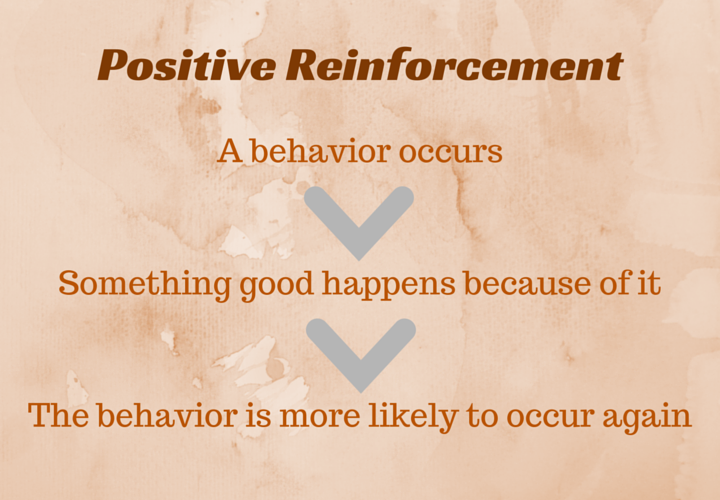
In behavioral psychology, reinforcement is the introduction of a favorable condition that will make the desired behavior more likely to happen, continue, or strengthen in the future. (Mowrer OH. Learning Theory and Behavior. John Wiley & Sons Inc; 1960. doi:10.1037/10802-000)
Positive reinforcement – adding a factor to increase a behavior
Negative reinforcement - removing a factor to increase a behavior
For more on negative reinforcement, there are some great examples at: Parenting for Brain: The Difference Between Positive/Negative Reinforcement and Positive/Negative Punishment [with Examples].
For the purpose of this article, the focus is on positive reinforcement: a reward to encourage the repeat of a behavior.
Rewards can look or sound a multitude of ways; they can last a quick 10 seconds, 5 minutes, or longer. They can be either tangible and extrinsic in value, or intangible and intrinsic in value.
Extrinsic rewards include stickers, smiley faces, stamps, and candy in addition to games, electronics, clothes, and cars. Intrinsic are those where the reward is more heartfelt, such as verbal praise, hugs, smiles, winks, high fives, spending time together, taking walks together, geo-caching, getting to pick the game being played, food being eaten, or movie being watched. Ultimately, we want our kids to do things for the intrinsic value - because it feels good, because it's the right thing to do - but the extrinsic ones can be really fun and exciting too! :)
More on intrinsic and extrinsic rewards at What is Positive Reinforcement By Parenting For Brain.
But positive reinforcement is not only a term for parents, it's for all humans as we venture through each day touching hundreds of lives along the way, even in the tiniest way possible. You never know the difference you're making in someone else's life with even the smallest of gestures.

Positive Reinforcement in the Workplace & in Public
These principles are true for adults in the workplace as well. Positive reinforcement builds a strong culture of team work, acceptance, productivity, and loyalty. False praise that the receiver knows wasn't truly earned is quickly dismissed; the complete absence of praise or acknowledgment is highly discouraging, and continual, lavish praise becomes meaningless. We all want to be praised for honest hard work and great dedication; when we receive it, we work harder to receive it again. This is a profound lesson in leadership that will be discussed more fully in a future post on leadership specifically, but positive reinforcement is integral for an effective and desirable workplace. Leadership First outlines the Top 10 Qualities That Make A Great Leader:

Over half of these are encouraged by positive reinforcement: inspiration, communication, confidence, commitment, attitude, and honesty.

Using positive reinforcement in the public arena is the most interesting of all. It is so open ended - it could be anything - and so potentially life changing for the receiver. This is where you really don't know the difference you are making, call it the Butterfly Effect, Pay It Forward, or the Ripple Effect. It's opening a door for someone, helping someone carry heavy load, paying part or all of someone's bill, or assisting someone in finding something or somewhere. It can be a simple please or thank you - when those words are said to someone, he/she is likely to feel appreciated and valued; thereby receiving a reward, and the behavior of the good service, kind gesture, or extra effort is more likely to be repeated in the future. From the dry cleaner, bank teller, or grocery clerk, to co-workers, bosses, and subordinates, to children, significant others, and family members.
Closing
I have read that it takes five (5) positive comments to outweight every one (1) negative comment. How Many Good Experiences Finally Outweigh a Bad One? by Bridget de Maine, Society Wellbeing May 15, 2017
"Seems like lots of us tend to glomp onto negative comments -- seems like those snide negative comments are coated with super-glue, and the positive are like post-it notes." How many positive comments cancel a negative one Friday, January 15, 2010
Unfortunately, we all find the negative easier to believe, so we are more llikely to hold on to the negative feedback than the positive. In the classroom, this is vital to keep at the forefront of awareness. When we correct students, we must also look for opportunties to give genuine praise as well. Adaptive Behavior Analysis, methods used to modify behavior, focuses on specific praise immediately following the action taken to deserve it.
The goals of positive reinforcement are to reinforce specific behaviors for replication and to facilitate strong feelings of self worth in the individual receiving it.
Imagine if every one of us made a distinct and concerted effort to give positive reinforcement to just one person each day, a family member, child, significant other, co-worker, person we see each day, or a stranger on the street. Over time, the impact would be enormous and absolutely world changing. Not only for each receiver, as they each have a moment of feeling good and feeling motivated to replicate that behavior, but also for each giver, as they each saw something good in another and had to, for one moment, be looking for and thinking about something positive. Furthermore, if we committed to giving positive reinforcement to just one person each day, we would be training our minds to always be on the look-out for something positive in others. What a wonderful world this would be.



Comments